The Colorado housing market will settle into a more balanced, functional rhythm heading into 2026, say industry analysts at the Colorado Association of REALTORS® (CAR).
Nationally, experts are also coalescing around a cautiously optimistic view for the real estate market in 2026. After several years of historically high mortgage rates and constrained inventory, most forecasts suggest a year of moderate growth, rather than boom or bust, for home prices and sales.
National home values are projected to rise about 1.2 percent in 2026, according to a recent Zillow Research forecast, with the number of markets seeing price declines falling from 24 to about 12. Zillow also anticipates a modest increase in existing home sales, projecting roughly 4.26 million transactions, up roughly 4 percent over 2025.
“Overall, industry experts characterize 2026 not as a dramatic rebound nor a collapse, but rather a market in transition — one marked by measured growth, increased activity, and evolving affordability dynamics.”
The National Association of Realtors (NAR) offers a slightly more bullish outlook, estimating that existing-home sales could rise by around 14 percent, driven by a combination of eased borrowing costs and gradually expanding inventory.
Pricing Trends
Experts generally agree that home price growth will remain modest through 2026. Many forecasts show annual national increases in the 2 percent to 4 percent range, a far cry from the double-digit jumps seen earlier in the decade and closer to long-term historical norms.
However, regional splits are expected to shape local markets unevenly. Some Sun Belt markets — once hotbeds of rapid price appreciation — may plateau or even cool as affordability issues and higher insurance costs weigh on demand. Meanwhile, certain Northeast and Midwest metros could see steadier price performance thanks to tighter supply and local economic strength.
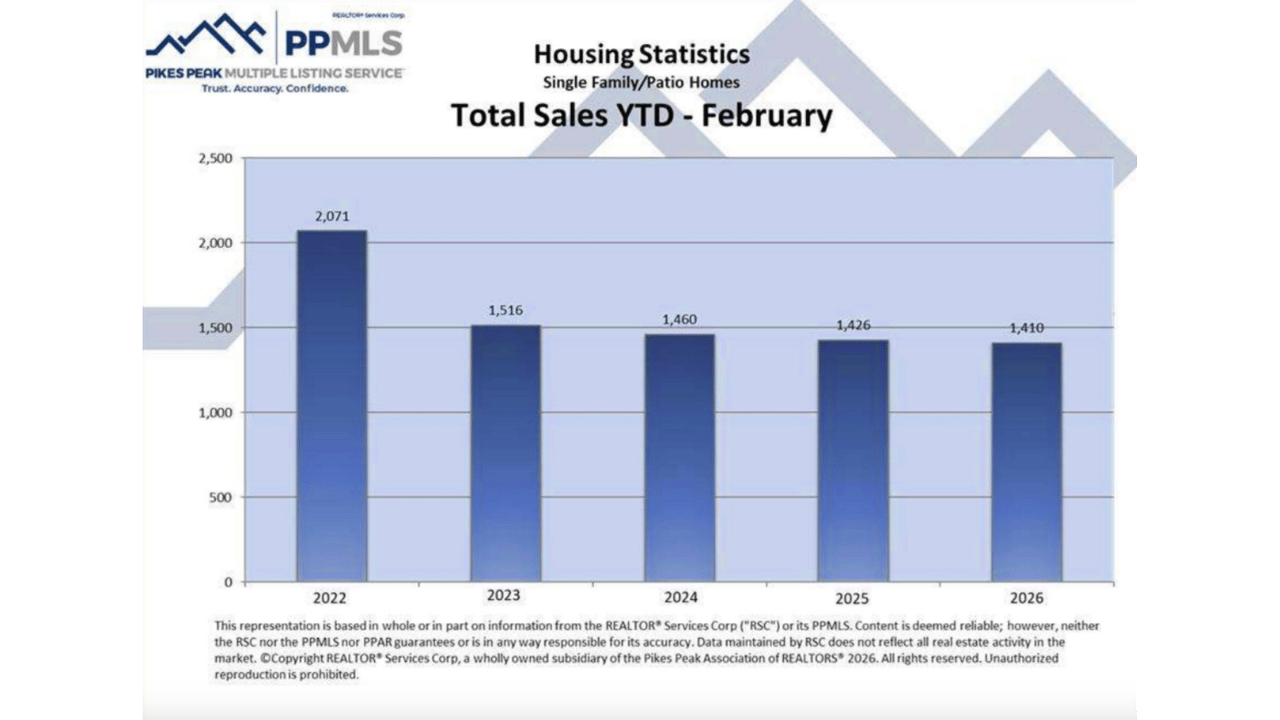
In Colorado Springs, condos and townhomes face the most strain as demand weakens and high HOA costs hinder sales. Economic indicators also show softening: job losses are mounting, manufacturing has contracted for nine months, and mortgage rates remain elevated. While buyers now hold more leverage than in recent years, many lack the confidence or financial stability to act.
Mortgage Rates and Affordability
Mortgage rates continue to be a pivotal influence on 2026 trends. While rates have cooled from their recent peaks, most forecasts place the average 30-year fixed mortgage rate near the low-to-mid-6 percent range for much of 2026. This represents an improvement from 2023–2025 levels but remains well above the ultra-low rates that fueled buying frenzies earlier in the decade.
Lower rates — even if not dramatically so — are seen by many economists as a key reason buyers who have stayed on the sidelines may begin returning to the market. Some analysts also note that wage growth could outpace home-price increases, improving real affordability for many prospective buyers.
Inventory and Sales Activity
A persistent shortage of homes for sale has kept price stability intact even as demand softens. Forecasts suggest inventory could continue to improve modestly in 2026 as more homeowners trade up or move, and builders bring new units online. However, most markets are still expected to remain below pre-pandemic supply levels, preventing a full shift to a buyer’s market.
Greater inventory combined with slight rate relief is expected to lift existing-home sales, though not uniformly. Some smaller or more affordable markets may see sales growth while high-cost regions remain sluggish.
Commercial and Investment Property
While much of the focus remains on residential housing, commercial real estate forecasts also project selective growth, particularly for property classes that adapt to post-pandemic trends such as multifamily and logistics facilities.
Overall, industry experts characterize 2026 not as a dramatic rebound nor a collapse, but rather a market in transition — one marked by measured growth, increased activity, and evolving affordability dynamics. For buyers, sellers, and investors alike, the year ahead promises stability with opportunity.