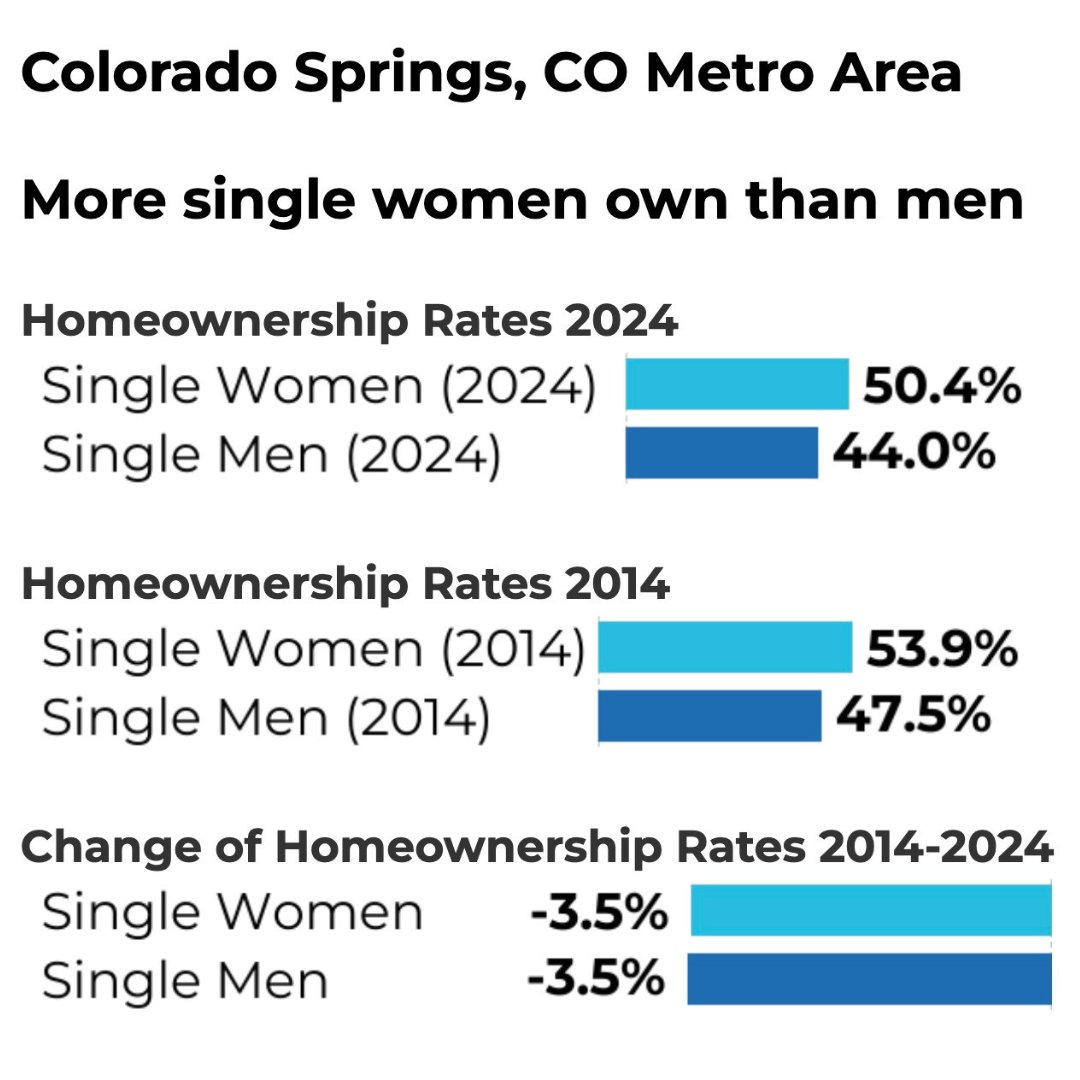
Single women are becoming a bigger force in the housing market, according to a recent American Community Survey.
Nationally, about 51 percent of single women own their homes, compared with just under 50 percent of single men. That may not seem like a huge difference, but it adds up: there are more than 20 million single women homeowners, compared with about 14 million single men.
In the past decade, homeownership rates among divorced women rose from 55% to 60%, and among separated women from 33% to 39%. Even among never-married women, rates increased from 30% to 34%. These gains suggest that more women are entering the housing market on their own.
At the same time, widowed women remain the most likely to own homes, with a homeownership rate of about 73%. But of course, this reflects something different—not a new entry into the market; rather, someone who is maintaining long-term housing stability.
The recent data also shows that single women are more financially stretched. On average, single women homeowners spend about 30% of their income on housing, compared with 26% for men. At the same time, they are slightly less likely to have a mortgage. About 51% of single women homeowners have a mortgage, compared with 54% of men.
This reflects the fact that many women have owned their homes longer and have paid down more of their debt. And, that longer tenure translates into more housing equity.
For an average home valued at around $300,000, after 18 years, homeowners have typically paid off close to 45% of their mortgage, turning time into equity. Over that same period, home prices have almost doubled, adding more than $140,000 in value. Combined with years of paying down the mortgage, many single women homeowners have built over $200,000 in total housing equity. As a result, single women homeowners tend to be older. The median age is about 63, compared with 57 for single men. They also tend to stay in their homes longer, about 18 years compared to 16 years on average for single men. And that extra time allows them to build equity and benefit from rising home values.