How to protect your budget without sacrificing important coverage
Homeowners insurance is part of the true cost of owning a home. For Colorado buyers, the roof, wind and hail deductibles, claims history and timing can all affect premiums and coverage options. These eight steps can help you find better value without simply choosing less protection.
1. Understand the deductible
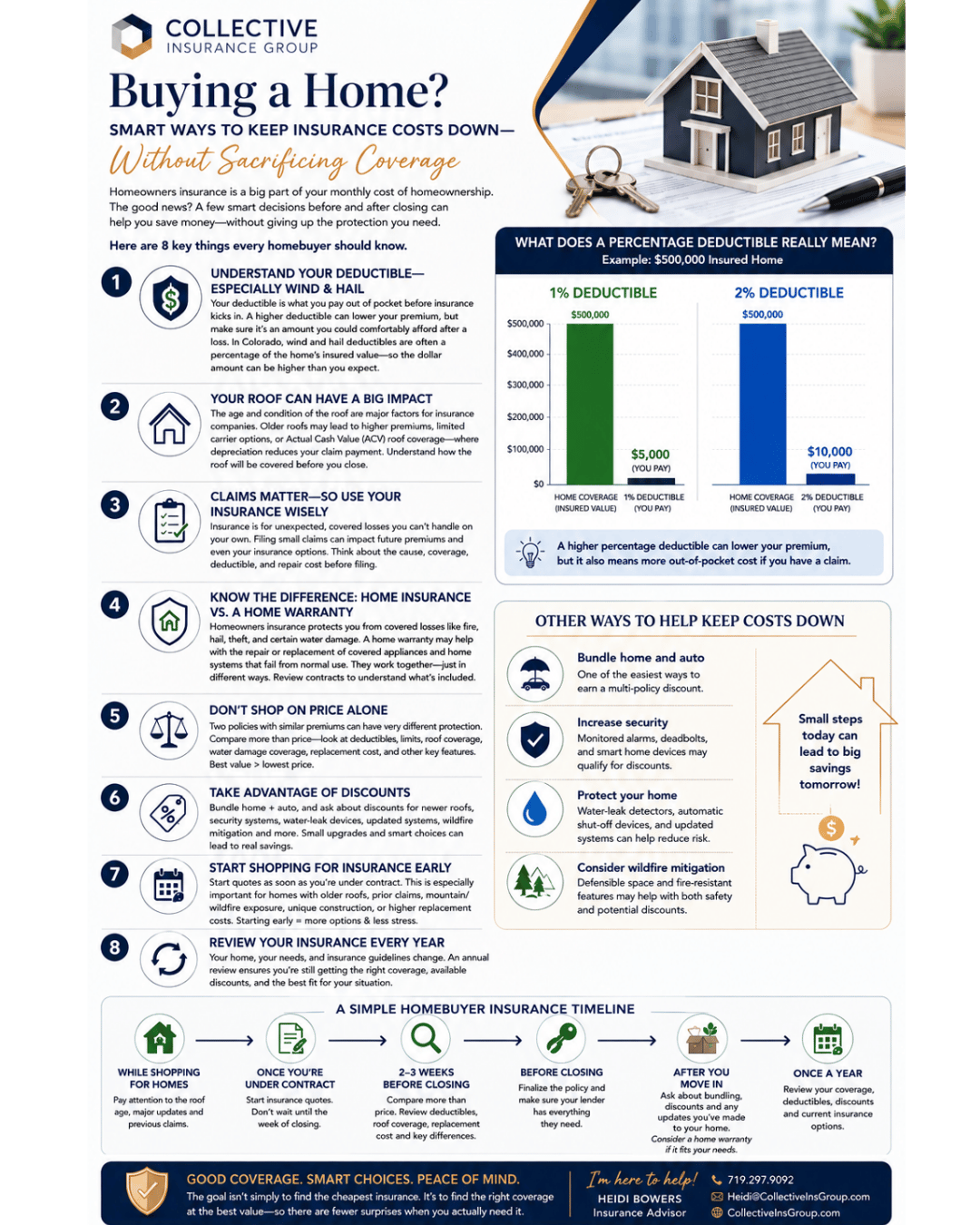
A higher deductible can reduce your premium, but it also increases what you pay after a covered loss. Colorado buyers should look closely at wind and hail deductibles, which may be percentages rather than flat amounts. On a home insured for $500,000, a 1% deductible equals $5,000 and a 2% deductible equals $10,000. Compare the dollar amount, not only the annual premium.
2. Ask how the roof is covered
Roof age and condition can influence premiums, carrier choices and claim payments. Replacement Cost coverage generally pays based on the cost to replace covered damage, subject to policy terms and the deductible. Actual Cash Value coverage factors in depreciation, which can mean a smaller payment for an older roof. Understand the roof coverage before closing.
3. Use claims thoughtfully
Insurance is designed for unexpected covered losses, not routine maintenance. Claims history may affect future pricing and carrier options. Before filing a smaller claim, consider the cause, likely coverage, repair estimate, deductible and potential insurance payment. A $3,000 loss with a $2,500 deductible is very different from a major $30,000 loss.
4. Know insurance versus a home warranty
Homeowners insurance generally addresses covered sudden losses such as fire, hail, theft and certain water damage. A home warranty may help repair or replace covered appliances and systems that fail through normal use. Each has separate terms, fees, limits and exclusions; one does not replace the other.
5. Compare value, not just price
Similar premiums can hide meaningful differences in roof coverage, wind and hail deductibles, water-damage limits and replacement-cost provisions. Compare coverage, deductibles, policy features and price together. Paying slightly more may prevent a much larger out-of-pocket expense later.
6. Ask about discounts
Bundling home and auto is common, but savings may also be available for a newer roof, monitored alarms, water-leak detection, automatic shut-off devices, updated systems or wildfire mitigation. Tell your advisor about improvements; the insurer may not know about them automatically.
7. Shop early
Begin obtaining quotes once you are seriously considering a property or go under contract. Extra time matters for homes with older roofs, previous claims, wildfire exposure, unusual construction or higher replacement costs. Early shopping helps reveal the full monthly cost before closing.
8. Review coverage annually
Your needs and the insurance market change. Review coverage after renovations, a roof replacement, new protective devices or valuable purchases. Confirm that the home is insured appropriately, available discounts are applied, deductibles remain manageable and the carrier still fits your needs.
Final thought: A knowledgeable insurance advisor should explain what is covered, what you would pay and where savings may be available. Asking the right questions early can make closing—and your first year of homeownership—much smoother.